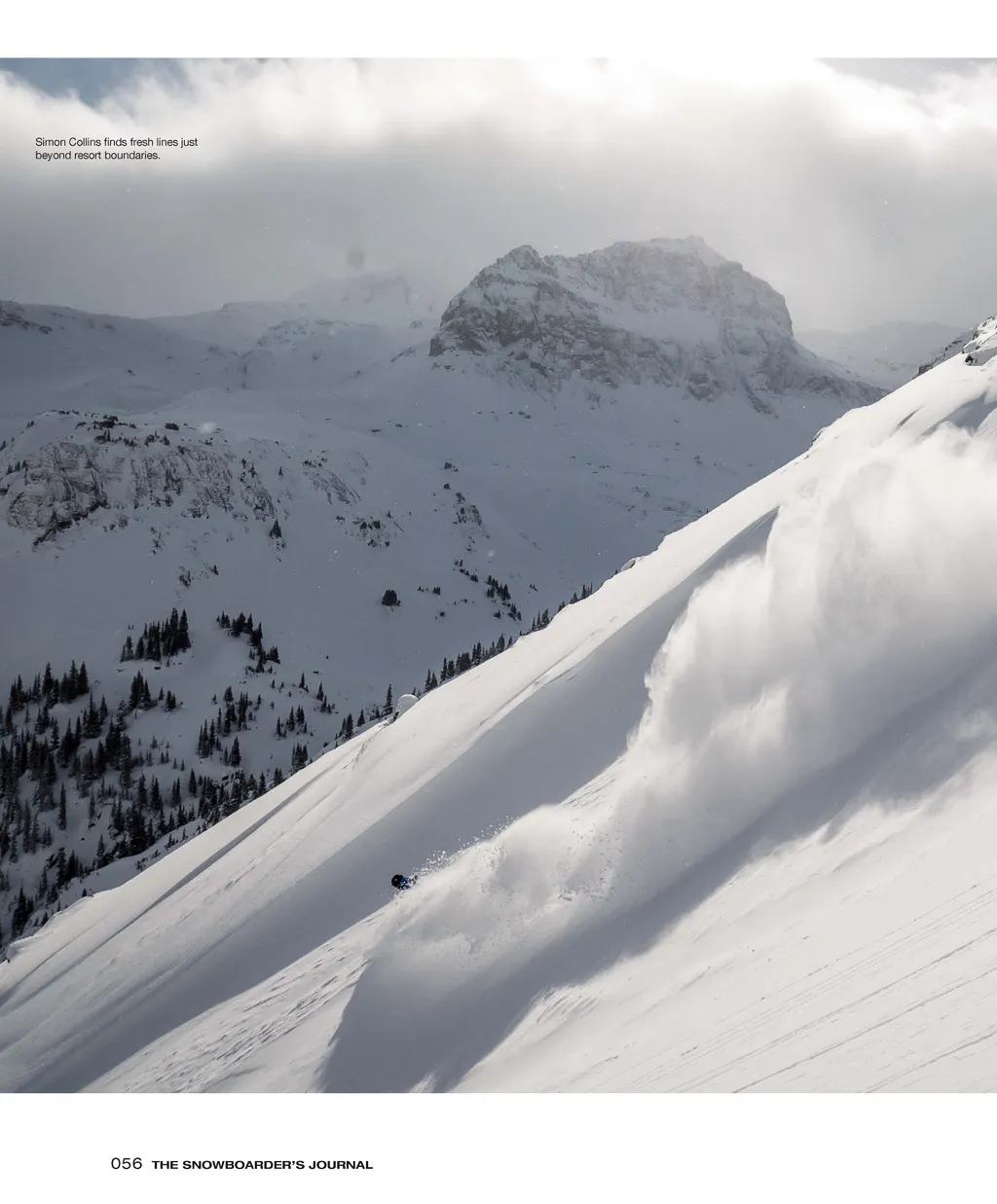
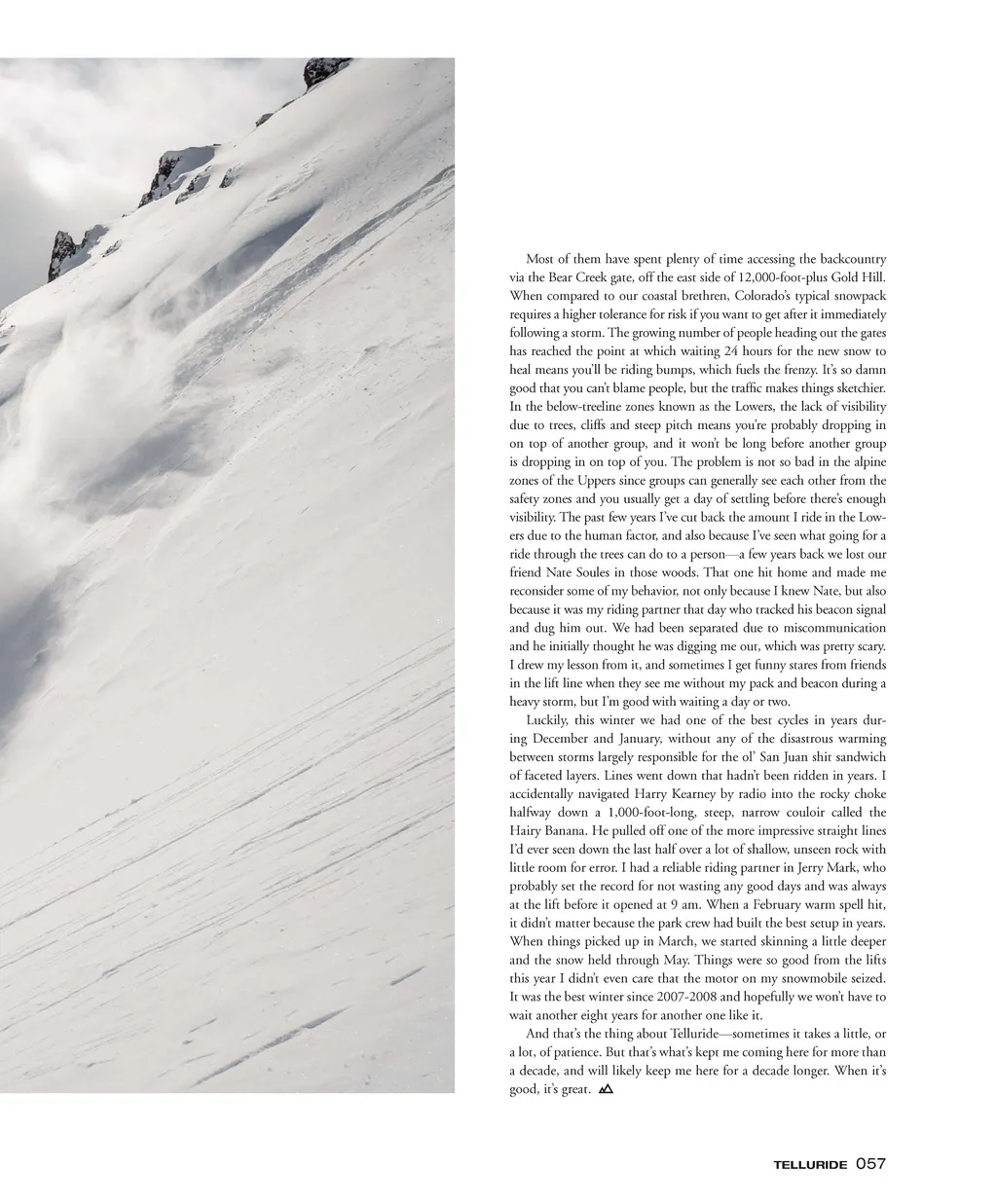
Most of them have spent plenty of time accessing the backcountry via the Bear Creek gate, off the east side of 12,000-foot-plus Gold Hill. When compared to our coastal brethren, Colorado’s typical snowpack requires a higher tolerance for risk if you want to get after it immediately following a storm. The growing number of people heading out the gates has reached the point at which waiting 24 hours for the new snow to heal means you’ll be riding bumps, which fuels the frenzy. It’s so damn good that you can’t blame people, but the traffic makes things sketchier. In the below-treeline zones known as the Lowers, the lack of visibility due to trees, cliffs and steep pitch means you’re probably dropping in on top of another group, and it won’t be long before another group is dropping in on top of you. The problem is not so bad in the alpine zones of the Uppers since groups can generally see each other from the safety zones and you usually get a day of settling before there’s enough visibility. The past few years I’ve cut back the amount I ride in the Low-ers due to the human factor, and also because I’ve seen what going for a ride through the trees can do to a person—a few years back we lost our friend Nate Soules in those woods. That one hit home and made me reconsider some of my behavior, not only because I knew Nate, but also because it was my riding partner that day who tracked his beacon signal and dug him out. We had been separated due to miscommunication and he initially thought he was digging me out, which was pretty scary. I drew my lesson from it, and sometimes I get funny stares from friends in the lift line when they see me without my pack and beacon during a heavy storm, but I’m good with waiting a day or two. Luckily, this winter we had one of the best cycles in years dur-ing December and January, without any of the disastrous warming between storms largely responsible for the ol’ San Juan shit sandwich of faceted layers. Lines went down that hadn’t been ridden in years. I accidentally navigated Harry Kearney by radio into the rocky choke halfway down a 1,000-foot-long, steep, narrow couloir called the Hairy Banana. He pulled off one of the more impressive straight lines I’d ever seen down the last half over a lot of shallow, unseen rock with little room for error. I had a reliable riding partner in Jerry Mark, who probably set the record for not wasting any good days and was always at the lift before it opened at 9 am. When a February warm spell hit, it didn’t matter because the park crew had built the best setup in years. When things picked up in March, we started skinning a little deeper and the snow held through May. Things were so good from the lifts this year I didn’t even care that the motor on my snowmobile seized. It was the best winter since 2007-2008 and hopefully we won’t have to wait another eight years for another one like it. And that’s the thing about Telluride—sometimes it takes a little, or a lot, of patience. But that’s what’s kept me coming here for more than a decade, and will likely keep me here for a decade longer. When it’s good, it’s great. TELLURIDE 057
The Snowboarder's Journal frequency 14.1: Page 57