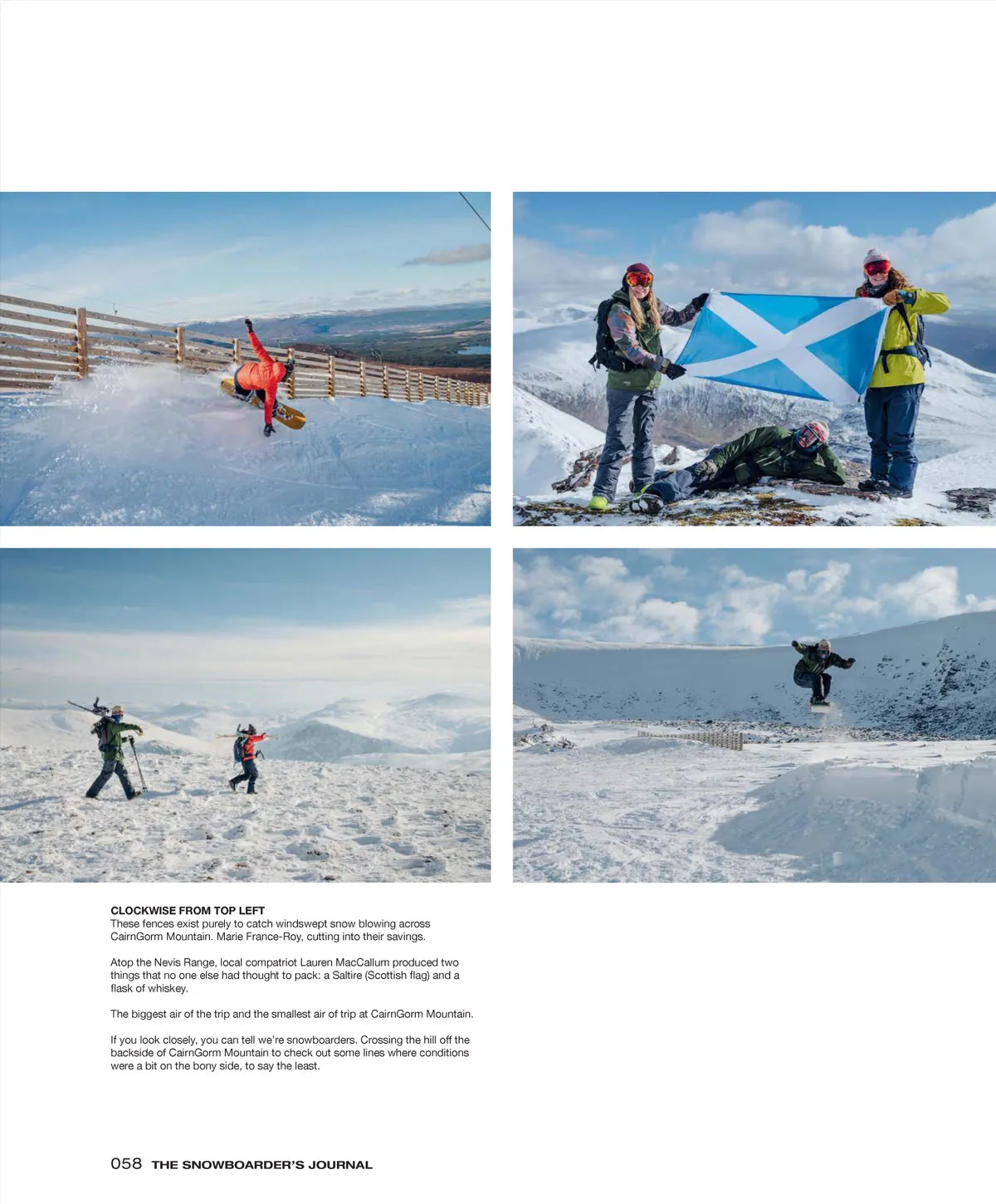
It was as captivating as the smell of the first summer rain. I couldn’t count the rainbows. I tried. Too many. Scotland has a population of roughly 5.4 million people. Less than 500 people own almost all the land. After more than a century of debating this polarization of land holdings, Scottish Parliament found a solution to the Grand-Canyon-sized wealth gap in their country when they passed the Land Reform Act in 2003. Commonly known as the right to roam, it basically allows anyone the freedom to go anywhere in Scotland for myriad uses—which are mainly recreational and educational in nature—without motorized vehicles, unless it’s to aid persons with disabilities. The majority of the land is much like wilderness areas in the United States, but in Scotland the wilderness area could be owned by a member of the Dutch royal family or an Arab sheikh. The system works because the right to roam comes with an access code that calls for all users to be reasonable, responsible and respectful to the land and its owners. I asked Lauren what that means and she responded, “Well, don’t be an arse-hole.” In practice, it means don’t harm the land, pack out what you pack in, keep out of any gardens and don’t go creeping around houses and peering into windows—essentially common courtesy. Accessing these lands feels the same as it does back home: You park your car and hike into the woods, which is exactly what we did. It was apparent immediately that Lauren’s intrepid spirit could help us look deeply into the eyes of the real Scotland. So, as good hippies do, we invited her to hop in the van. It was Sunday afternoon. Lauren works a nine-to-five in Glasgow. She called her boss, told him some American snowboarders/filmmakers needed her help and she’d be out of the office for the week. He obliged her request for time off and we hit the road at a top speed of 55 miles per hour. Like everywhere else in the world, you can’t expect to understand Scotland or those who inhabit it until you’ve sunk your toes into its foreign soil and clinked glasses of its local ale. When the glasses touch in Scotland it is customary to say “slàinte” (SLAHN-cheh), which lit-erally translates to “health.” This sentiment walks a tightrope strung with irony as we all know consumption of alcohol has contrary ef-fects on our pumps and pipes, but that’s beside the point. To me, it signifies the stubborn resistance of a subjugated population. Since its union with England in 1707 following millennia of complicated dispute, rights and freedom as the Scots knew it, from the High-lands and Lowlands to the Scottish Isles, were taken over by a foreign power. All the Scots had was their health. The Scottish layperson had no say in the matter when the British Roy-al Army arrived to enforce the queen’s decision to sell off land to the high-est bidder. During the Highland Clearances of the 18 th and 19 th centuries, the traditional Gaelic occupants of the area known as The Highlands were torn away from their plots of land, which wereplucked petal by petal like a daisy in a schoolyard. These land seizures parceled out Scotland to the wealthy until more than 90 percent of the land was privately owned. This, combined with migration to lowland urban areas during the Indus-trial Revolution, all but eradicated traditional Gaelic culture. The Highlands, which encompass the northwestern half of Scot-land beyond the Highland Boundary Fault, top out at 4,406-foot Ben Nevis, the tallest peak in the British Isles. It’s a vast landscape of ancient rock with sheer cliffs, deep valleys and great fjords along the Atlantic Ocean and North Sea. It’s also one of the most sparsely populated areas in Europe. Much of the Highlands is currently comprised of private properties commonly referred to as “estates.” Think massive Victorian-era architecture, tweed coats, tobacco pipes, shotguns and beautifully groomed spaniels. These estates serve as vacation homes and short-stay retreats for full-pocketed folks from around the world. Almost all hunt-ing and fishing in Scotland takes place at these estates. The option to buy a permit to kill an animal to feed your family doesn’t exist. Throw a lure in a creek and you could face a fine. We didn’t expect to run into splitboarders in the Highlands. But we did. Craig Burry is, for all we know, the only splitboarding moun-tain guide there. Somehow David had gotten in touch with Craig on Facebook through a friend of a friend. Like Lauren, we met Craig at the Old Bridge Inn in Aviemore. Craig was about my age, maybe in his mid-to-late 20s. He was calm, knowledgeable and optimistic about leading us to some decent snow. Craig confirmed what we’d heard from other locals: they were expe-riencing the lowest snowfall in 30 years. Even though the opposite was true back home in western North America, we shrugged it off. We were happy to make do with what was available. Perhaps the silver lining was the notoriously bad winter weather in Scotland didn’t really live up to the hype. Most days, we could see our surroundings. The landscape remind-ed me of the barren hills of the American west before interstate highways, with snowcapped, treeless peaks like you’d find in New Zealand. It was as captivating as the smell of the first summer rain. I couldn’t count the rainbows. I tried. Too many. SCOTLAND 059
The Snowboarder's Journal frequency 15.2: Page 59