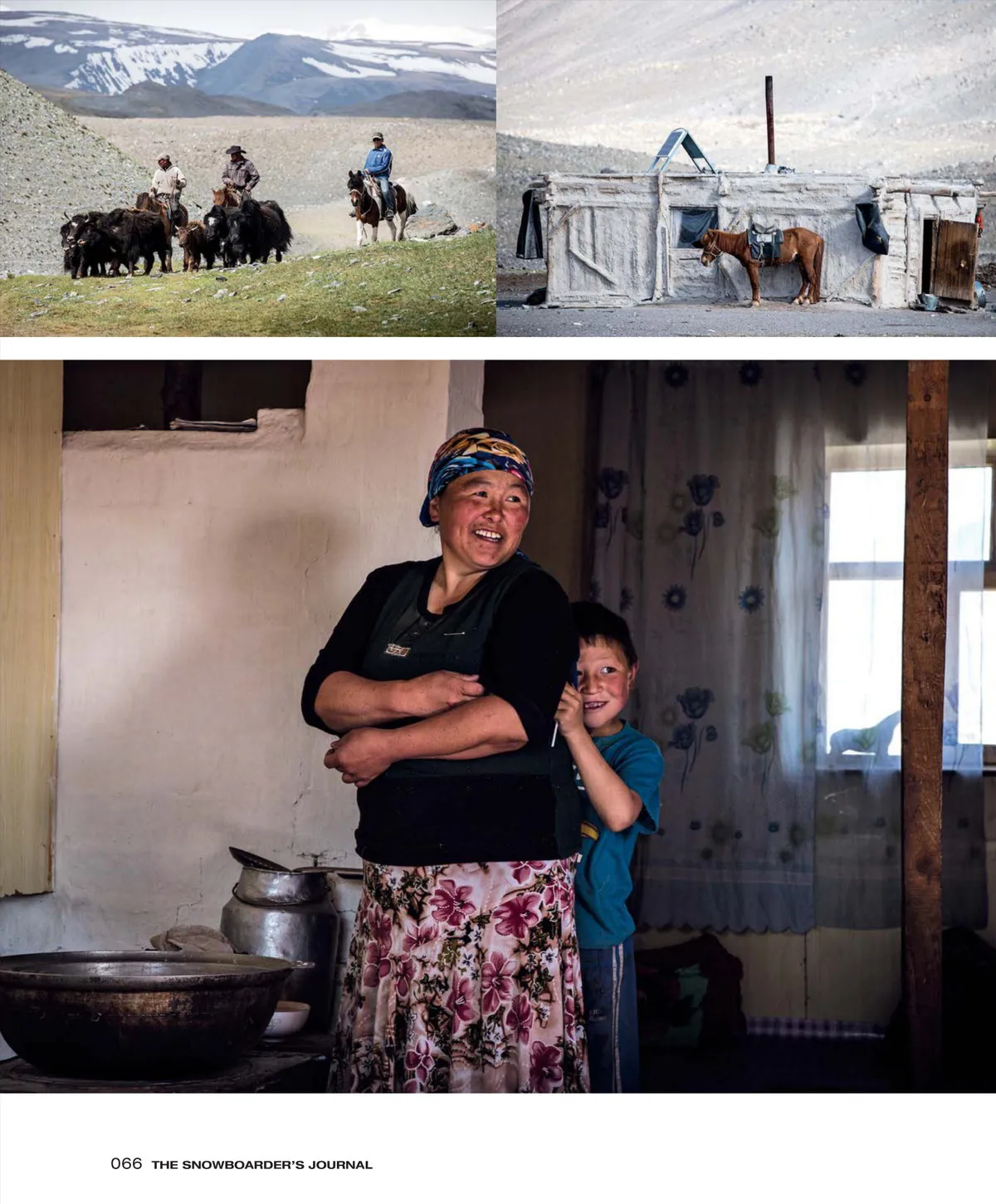
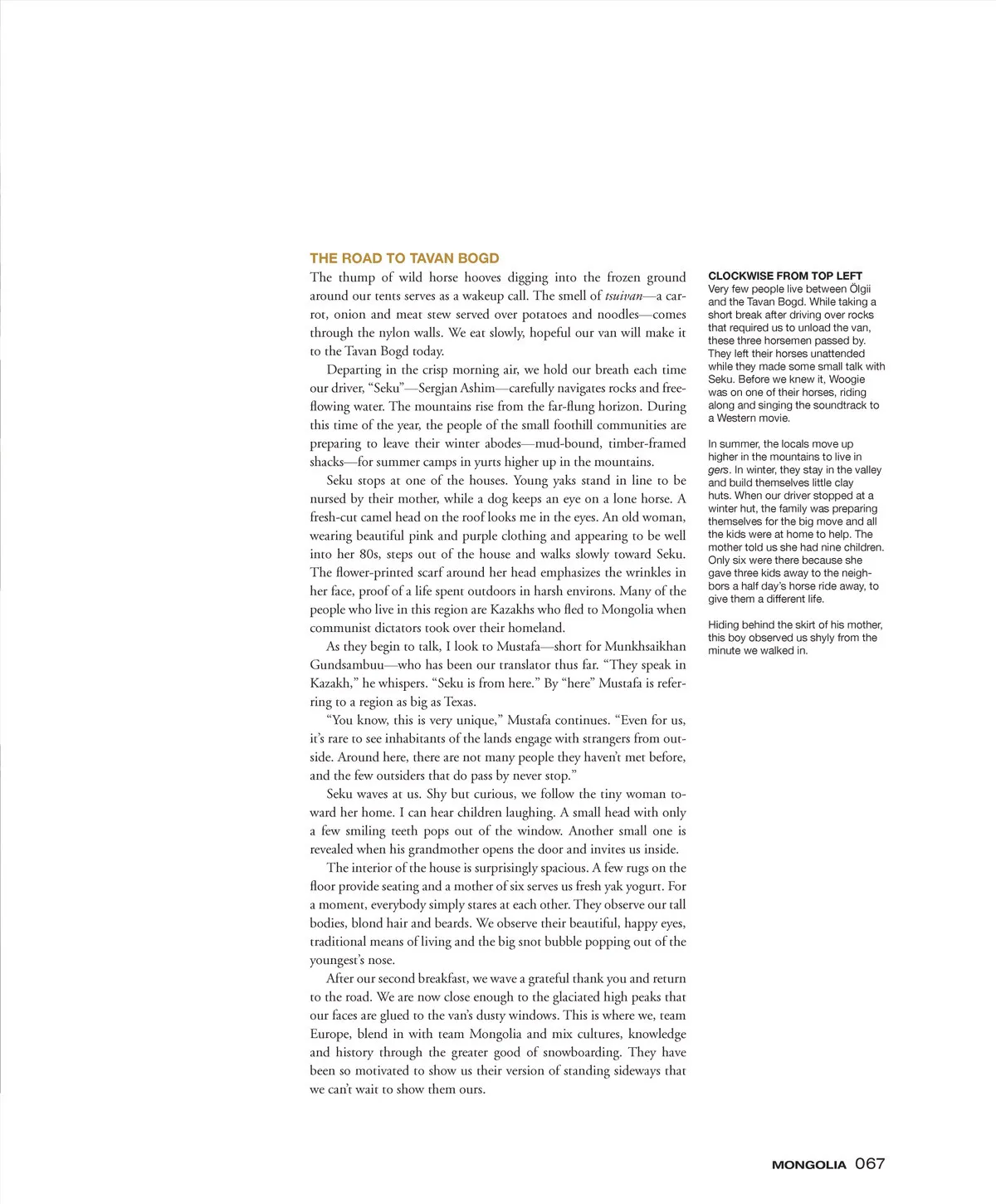
THE ROAD TO TAVAN BOGD The thump of wild horse hooves digging into the frozen ground around our tents serves as a wakeup call. The smell of tsuivan —a car-rot, onion and meat stew served over potatoes and noodles—comes through the nylon walls. We eat slowly, hopeful our van will make it to the Tavan Bogd today. Departing in the crisp morning air, we hold our breath each time our driver, “Seku”—Sergjan Ashim—carefully navigates rocks and free-flowing water. The mountains rise from the far-flung horizon. During this time of the year, the people of the small foothill communities are preparing to leave their winter abodes—mud-bound, timber-framed shacks—for summer camps in yurts higher up in the mountains. Seku stops at one of the houses. Young yaks stand in line to be nursed by their mother, while a dog keeps an eye on a lone horse. A fresh-cut camel head on the roof looks me in the eyes. An old woman, wearing beautiful pink and purple clothing and appearing to be well into her 80s, steps out of the house and walks slowly toward Seku. The flower-printed scarf around her head emphasizes the wrinkles in her face, proof of a life spent outdoors in harsh environs. Many of the people who live in this region are Kazakhs who fled to Mongolia when communist dictators took over their homeland. As they begin to talk, I look to Mustafa—short for Munkhsaikhan Gundsambuu—who has been our translator thus far. “They speak in Kazakh,” he whispers. “Seku is from here.” By “here” Mustafa is refer-ring to a region as big as Texas. “You know, this is very unique,” Mustafa continues. “Even for us, it’s rare to see inhabitants of the lands engage with strangers from out-side. Around here, there are not many people they haven’t met before, and the few outsiders that do pass by never stop.” Seku waves at us. Shy but curious, we follow the tiny woman to-ward her home. I can hear children laughing. A small head with only a few smiling teeth pops out of the window. Another small one is revealed when his grandmother opens the door and invites us inside. The interior of the house is surprisingly spacious. A few rugs on the floor provide seating and a mother of six serves us fresh yak yogurt. For a moment, everybody simply stares at each other. They observe our tall bodies, blond hair and beards. We observe their beautiful, happy eyes, traditional means of living and the big snot bubble popping out of the youngest’s nose. After our second breakfast, we wave a grateful thank you and return to the road. We are now close enough to the glaciated high peaks that our faces are glued to the van’s dusty windows. This is where we, team Europe, blend in with team Mongolia and mix cultures, knowledge and history through the greater good of snowboarding. They have been so motivated to show us their version of standing sideways that we can’t wait to show them ours. CLOCKWISE FROM TOP LEFT Very few people live between Ölgii and the Tavan Bogd. While taking a short break after driving over rocks that required us to unload the van, these three horsemen passed by. They left their horses unattended while they made some small talk with Seku. Before we knew it, Woogie was on one of their horses, riding along and singing the soundtrack to a Western movie. In summer, the locals move up higher in the mountains to live in gers . In winter, they stay in the valley and build themselves little clay huts. When our driver stopped at a winter hut, the family was preparing themselves for the big move and all the kids were at home to help. The mother told us she had nine children. Only six were there because she gave three kids away to the neigh-bors a half day’s horse ride away, to give them a different life. Hiding behind the skirt of his mother, this boy observed us shyly from the minute we walked in. MONGOLIA 067
The Snowboarder's Journal frequency 15.4: Page 67