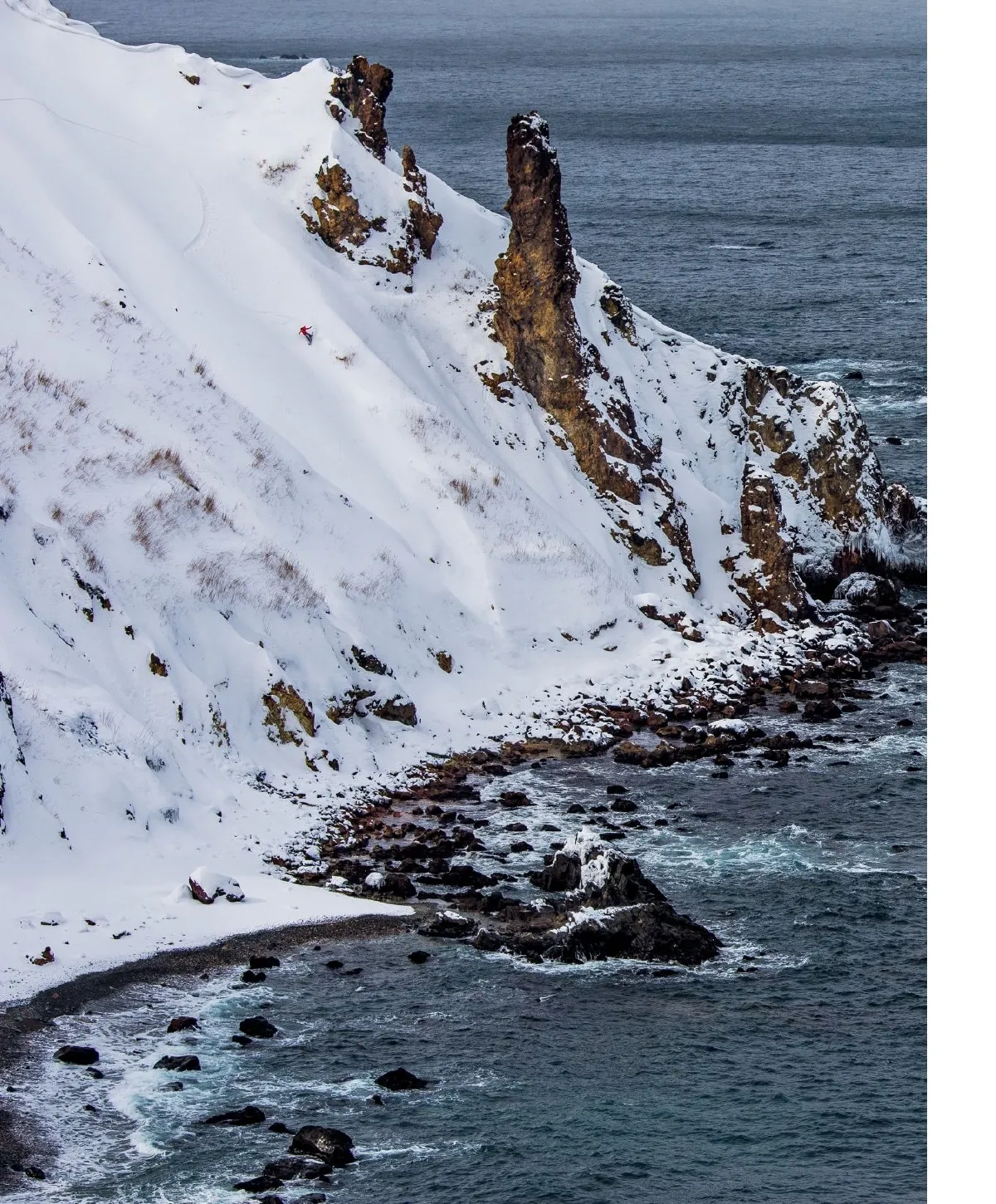
You’re 16 and going to the Olympics. How did that play on you mentally? I was such an underdog, no one even thought I was going to make the team, so going into it I had nothing to lose. I qualified for the U.S. in second, like, “Sweet, I’ve always wanted to go to the Olym-pics, dream come true,” and I don’t think I had the mental clarity to understand what that really meant, that it was just the beginning. Then walking into opening ceremonies with everyone I was like, “Oh, fuck. What am I doing here?” I got super overwhelmed—“I’m here for my country,” and all these expectations and pressures that I had never thought about before. I ended up sixth, which was pretty good, considering. That was when snowboarding went from being a passion to a job for me, which is a funny thing to think about when you’re 16. I got back from that experience dazed and drained, thinking, “I just want to snowboard.” I’d been so driven to succeed in snowboarding, and the path I had been shown to achieve that was through competing, and I was good at it. But once I got to the other end of that rope, it was my reprieve to just go ride the mountain again. It was a segue into how I’ve approached the rest of my career. Shortly after that, Burton put me on the global team, and I went freeriding all season with [photographer] Chris Owen and some of the best women riders in the industry. I did some contests, but they were supportive of me expanding my riding and branching out. It was when I fell in love with the discovery and the adventure of what it takes to really create the shots I grew up looking at in the mags— it’s so different than competing. Were you stepping into the backcountry at that point? A little bit, but mostly park and on-resort powder riding, maybe ducking a few ropes. Then I spent the next seven years competing full-time again. I went to the Vancouver Olympics in 2010, where I got 10 th , which was a huge disappointment. You’re expecting to move up from your last result… I wasn’t winning all the time—Kelly [Clark] and Gretchen [Bleiler] were at the top—but I really felt like I had a chance to podium. The conditions were a big letdown, but that’s part of our sport—it happens in contests, it happens in the backcountry, it happens to the average snowboarder who books a trip and is like, “Sweet! I’m gonna go ride powder,” and then there’s no powder. So, it’s part of it, but it’s easy to get frustrated. How do you deal with that mentally? It’s been a lifelong lesson for me. I’ve had a lot of big letdowns as far as competition goes. You work so hard preparing for something and put so much energy and effort into it, and it almost turns into this love affair. When you fail, it’s heartbreaking, like a breakup. But if you win, it fades, and if you lose, it fades. My biggest lesson over the years of having these big peaks and valleys in my career has been that you always have to come back to the simplicity of enjoying the moment. You have to remember why you are on your snowboard, the joy of it all. Lines to the ocean in Hokkaido, Japan, with a taxing and sketchy hike out. Photo: Ben Girardi Then you didn’t make the Sochi Olympics in 2014. Going into Sochi, I was so determined that I was gonna podium there. I had all these plans and goals for what I was going to be able to do afterward. I felt like I needed to prove myself on the competi-tive side before I went to the backcountry to film—I felt like I had to earn that by getting an Olympic medal, even though my heart has always been in the mountains. I had so much pressure on myself and I did so poorly. I landed maybe two runs in all the qualifying events and completely blew out, didn’t even come close to qualifying. Why did you feel an Olympic podium was necessary? It was an unfinished goal. I didn’t want to walk away from it and re-gret that decision. When I didn’t put it together, my instant reaction was like, “All right, well, I better go ride some powder! Because that’s what I’ve been trying to do this whole time.” Hana [Beaman] brought me on a backcountry trip to Montana. It was my first time walking around in snowshoes. I was distressed, but Hana helped. She had already stepped away from competing, then decided to go for those Olympics and didn’t make it either. She was bummed when she didn’t make the Olympics, but she immediately was like, “Cool, I’m gonna go enjoy this trip, you should come.” And I was like, “Are we shooting? What are we trying to accom-plish?” All these things. She was making a webisode series and said, “We’re just gonna go have fun. And if we don’t feel like snowboard-ing one day, we’re not gonna snowboard.” She inspired me to be super present and content with the decisions I make. She makes the best of each situation and every day, really. ELENA HIGHT 079
The Snowboarder's Journal frequency 17.1: Page 79