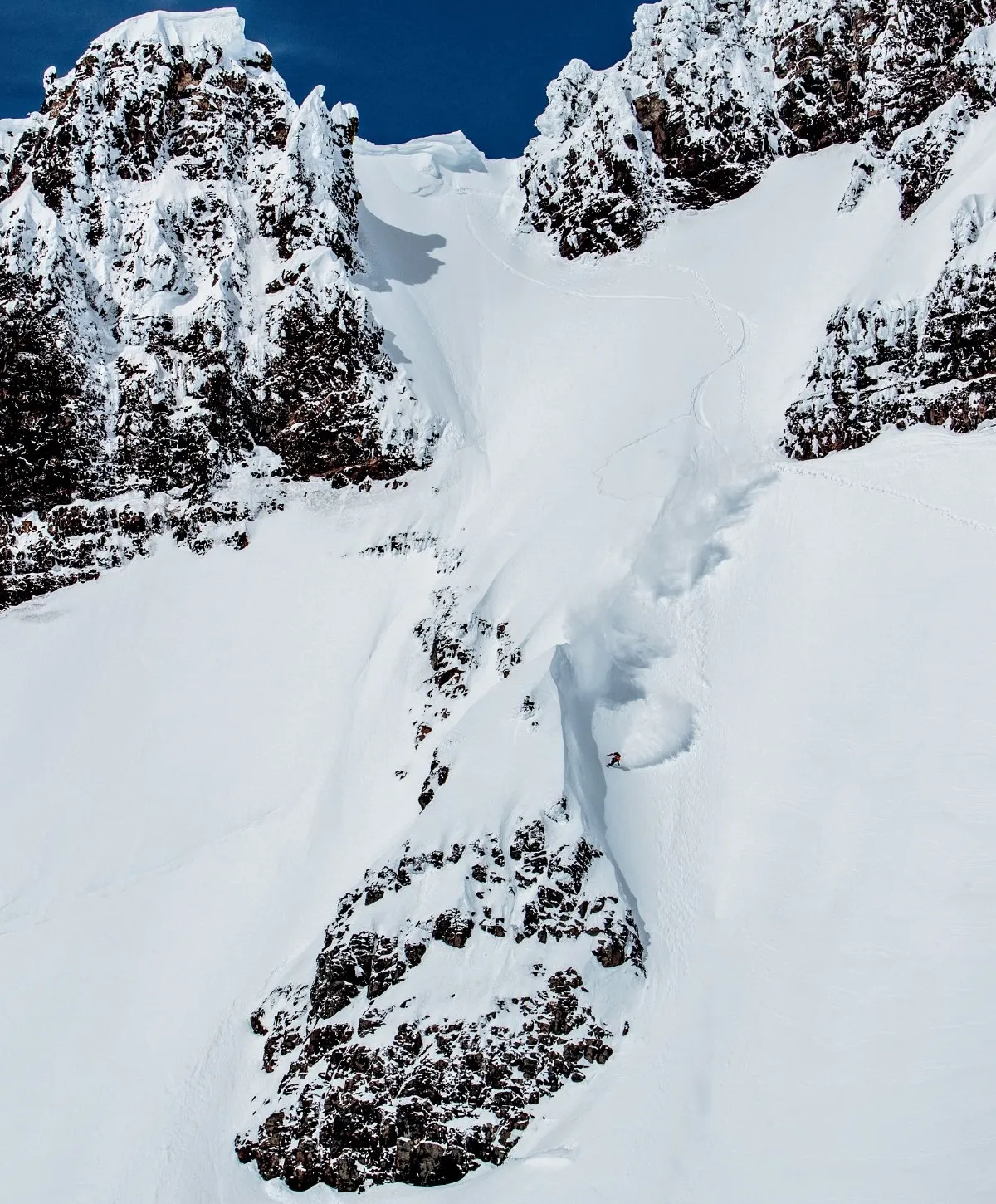
“Although Ben appreciates his job and the places it takes him, he gets homesick—he truly misses his home, parents, friends, skateparks, food, Mt. Bachelor, and volcanic lines like this a short distance from his bed. Ben and I only get a couple days a year together to shoot photos and video, and this was one of them from last season.” Photo: Pete Alport And then it was the Olympic year? I had been doing well in halfpipe contests, my sponsors wanted me to go, so I made the call to push as best as I could. I put my heart and soul into it. We did a lot of big halfpipe camps—I was riding so much halfpipe that I knew I could land at the top of the wall and have so much speed… it was sick to be that on point, but after a while it got old. But if you’re going to do it, you might as well do it. Red Bull put me on a training regimen; I had a nutritionist. It was the best shape I’d ever been in. I could feel the difference, my body was connected, I had full control over my board. It was a good feel-ing, but it took so much work. The first contest in Copper I beat Shaun [White]—he was pissed, I could tell he had no idea what was going on. My run wasn’t crazy, it was just different, and he had all the double corks. Once you get a first amongst the US dudes, you’re kind of locked into the Olympic Team. I got comfortable after my next result and was named to the team at the final qualifier in Mammoth. You get through X Games, get a nice haircut and then go… To Pyeongchang. What a weird place. It was so structured. Fly in, take a bus to a hotel, go through processing, talk to ex-Olympic athletes about Olympic pride, being mellow on social media and not throwing out any rogue tweets. Get your clothes to walk in—try to get those signed by Red [Gerard, who won Slopestyle there] so I can eBay them—and then they move you up into the village. It was in the middle of nowhere, minus 10 Fahrenheit and so windy. There were these big gray apartment buildings filled with unfinished con-dos, plastic everywhere, camp chairs in the living room. Everyone was sharing rooms and you’re eating in this big cafeteria. There were so many nerves too, but then it’s just like any other contest. The pipe was actually one of the best I’ve ever ridden, but the vibe was weird. Even the practice days, it was an hour and a half to get to the venue, everything is timed to a T and stressful—there’s people telling you where you can and can’t go. It’s just a big production. I’m glad I did it, but I was relieved when it was over. I was hyped I did alright. I would have loved to do better. I went straight to Japan and filmed for a week. It was so nice to be done and go ride pow. Then you stepped into making Joy . There was no one telling us where we needed to go or what we needed to film. Every day, if it was good, we would go out and snowboard and do what we wanted to do. It makes me want to do this every year. How did you, Sage Kotsenburg and Red Gerard wind up at the helm of a project? We recognized that together we can do things our own way. We had a good production crew behind it. We went up to Baldface [Lodge] in late December, party-lapped, partied, got a couple hammers, got some photos, and made a good plan for the rest of the winter. That was the real takeoff for the whole thing. Snow and mountain safety was held to a very high level. There was trust in the crew. Everyone had taken avalanche courses leading up to filming and we didn’t set anything off. We can always learn more about that, but I feel we did a good job. Were there points this year when things just started working? When we were in Revelstoke [BC] in March. We had no idea where we were going, the snow wasn’t good for what we were trying to ride, but we’d always find a high-north-facing pitch where we could get something done. Those days were epic, getting out early, exploring forever and staying late. We ended up getting it pretty good thanks to prior experience. Sage has been doing this for a while now and even though he’s still learning, he had so much knowledge. He’s on his weather game and took a grip of safety courses. Every trip had a good moment, everyone brought something different to the crew and made it special in its own way. How about that ravine gap in Wyoming? That was pretty much all Sage. I was egging him on, but I didn’t really realize what I was doing. We were like, “Let’s go look at the ravine gap,” and we’re standing up there and he said, “We probably got it.” Then suddenly we were saying, “We’ve got it,” and built it, and kept that mentality through the whole thing. It ended up work-ing pretty good. What is it about those film days that keeps you motivated? I love everything about it. I love the sled, I love the cold mornings, I love drinking coffee—it’s a solid day of work. It just feels better than staying at some hotel, waking up for practice at 9:30 and walking to the chairlift to get to the halfpipe. I love eating lunch out in the backcountry. You got the view, you warm up the sandwich in the sled, you can bring soup out there, get gourmet. I love figuring out a way to build a jump the best way you can build it. The whole thing is so fun, making everything perfect. 048 THE SNOWBOARDER’S JOURNAL
The Snowboarder's Journal frequency 17.2: Page 48