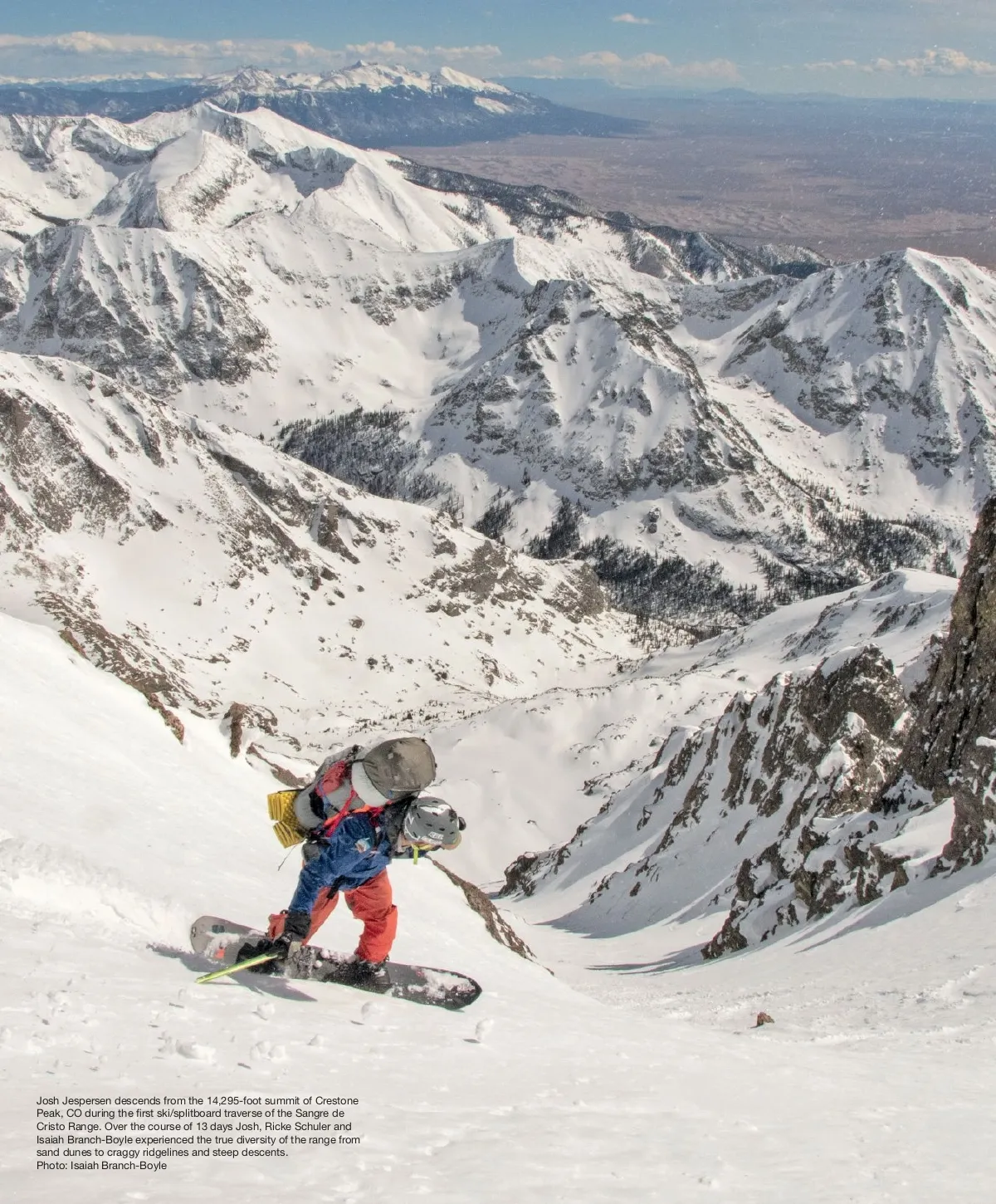
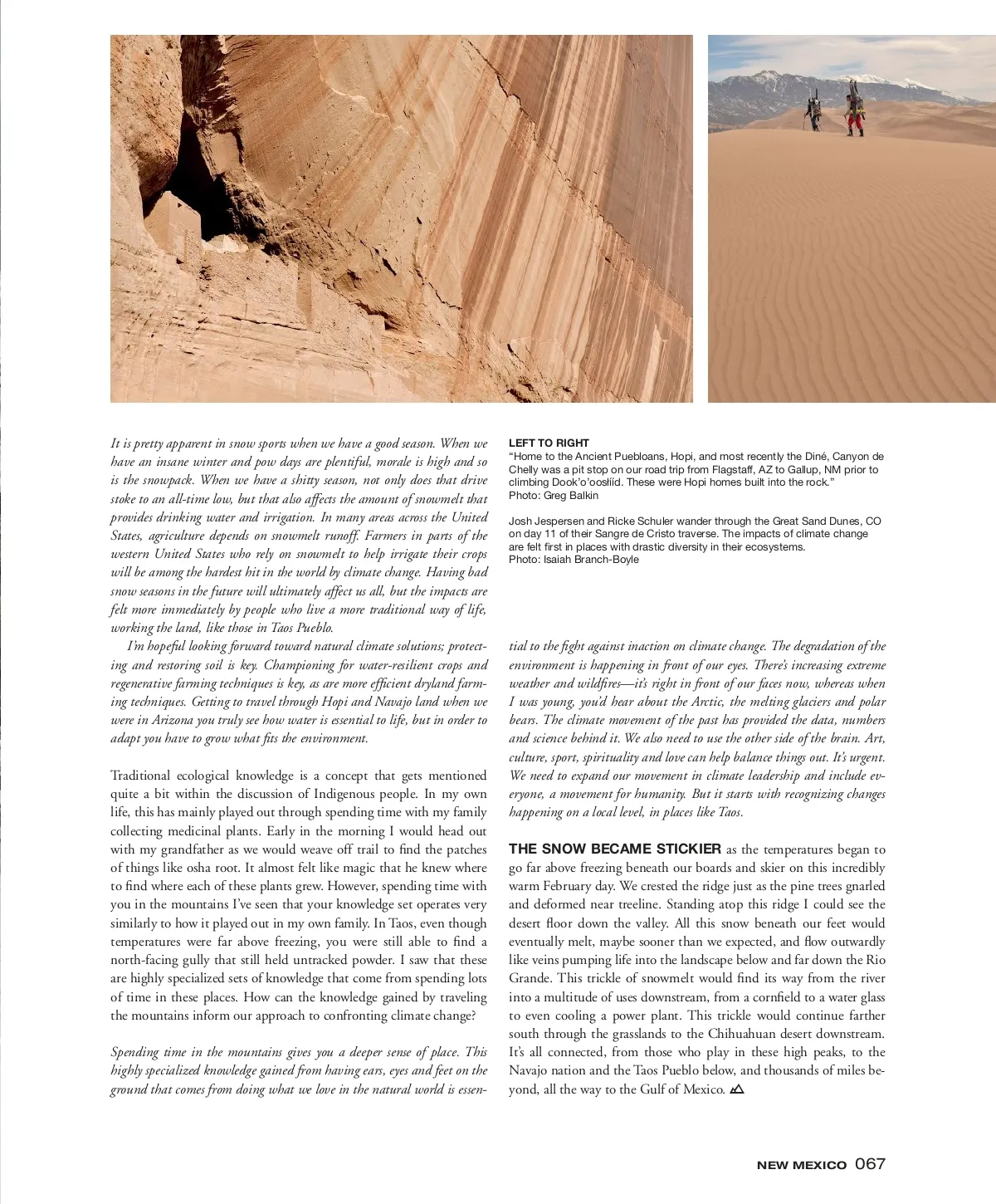
It is pretty apparent in snow sports when we have a good season. When we have an insane winter and pow days are plentiful, morale is high and so is the snowpack. When we have a shitty season, not only does that drive stoke to an all-time low, but that also affects the amount of snowmelt that provides drinking water and irrigation. In many areas across the United States, agriculture depends on snowmelt runoff. Farmers in parts of the western United States who rely on snowmelt to help irrigate their crops will be among the hardest hit in the world by climate change. Having bad snow seasons in the future will ultimately affect us all, but the impacts are felt more immediately by people who live a more traditional way of life, working the land, like those in Taos Pueblo. I’m hopeful looking forward toward natural climate solutions; protect-ing and restoring soil is key. Championing for water-resilient crops and regenerative farming techniques is key, as are more efficient dryland farm-ing techniques. Getting to travel through Hopi and Navajo land when we were in Arizona you truly see how water is essential to life, but in order to adapt you have to grow what fits the environment. Traditional ecological knowledge is a concept that gets mentioned quite a bit within the discussion of Indigenous people. In my own life, this has mainly played out through spending time with my family collecting medicinal plants. Early in the morning I would head out with my grandfather as we would weave off trail to find the patches of things like osha root. It almost felt like magic that he knew where to find where each of these plants grew. However, spending time with you in the mountains I’ve seen that your knowledge set operates very similarly to how it played out in my own family. In Taos, even though temperatures were far above freezing, you were still able to find a north-facing gully that still held untracked powder. I saw that these are highly specialized sets of knowledge that come from spending lots of time in these places. How can the knowledge gained by traveling the mountains inform our approach to confronting climate change? Spending time in the mountains gives you a deeper sense of place. This highly specialized knowledge gained from having ears, eyes and feet on the ground that comes from doing what we love in the natural world is essen-LEFT TO RIGHT “Home to the Ancient Puebloans, Hopi, and most recently the Diné, Canyon de Chelly was a pit stop on our road trip from Flagstaff, AZ to Gallup, NM prior to climbing Dook’o’oosłííd. These were Hopi homes built into the rock.” Photo: Greg Balkin Josh Jespersen and Ricke Schuler wander through the Great Sand Dunes, CO on day 11 of their Sangre de Cristo traverse. The impacts of climate change are felt first in places with drastic diversity in their ecosystems. Photo: Isaiah Branch-Boyle tial to the fight against inaction on climate change. The degradation of the environment is happening in front of our eyes. There’s increasing extreme weather and wildfires—it’s right in front of our faces now, whereas when I was young, you’d hear about the Arctic, the melting glaciers and polar bears. The climate movement of the past has provided the data, numbers and science behind it. We also need to use the other side of the brain. Art, culture, sport, spirituality and love can help balance things out. It’s urgent. We need to expand our movement in climate leadership and include ev-eryone, a movement for humanity. But it starts with recognizing changes happening on a local level, in places like Taos. THE SNOW BECAME STICKIER as the temperatures began to go far above freezing beneath our boards and skier on this incredibly warm February day. We crested the ridge just as the pine trees gnarled and deformed near treeline. Standing atop this ridge I could see the desert floor down the valley. All this snow beneath our feet would eventually melt, maybe sooner than we expected, and flow outwardly like veins pumping life into the landscape below and far down the Rio Grande. This trickle of snowmelt would find its way from the river into a multitude of uses downstream, from a cornfield to a water glass to even cooling a power plant. This trickle would continue farther south through the grasslands to the Chihuahuan desert downstream. It’s all connected, from those who play in these high peaks, to the Navajo nation and the Taos Pueblo below, and thousands of miles be-yond, all the way to the Gulf of Mexico. NEW MEXICO 067
The Snowboarder's Journal The Snowboarder's Journal 18.4: Page 67