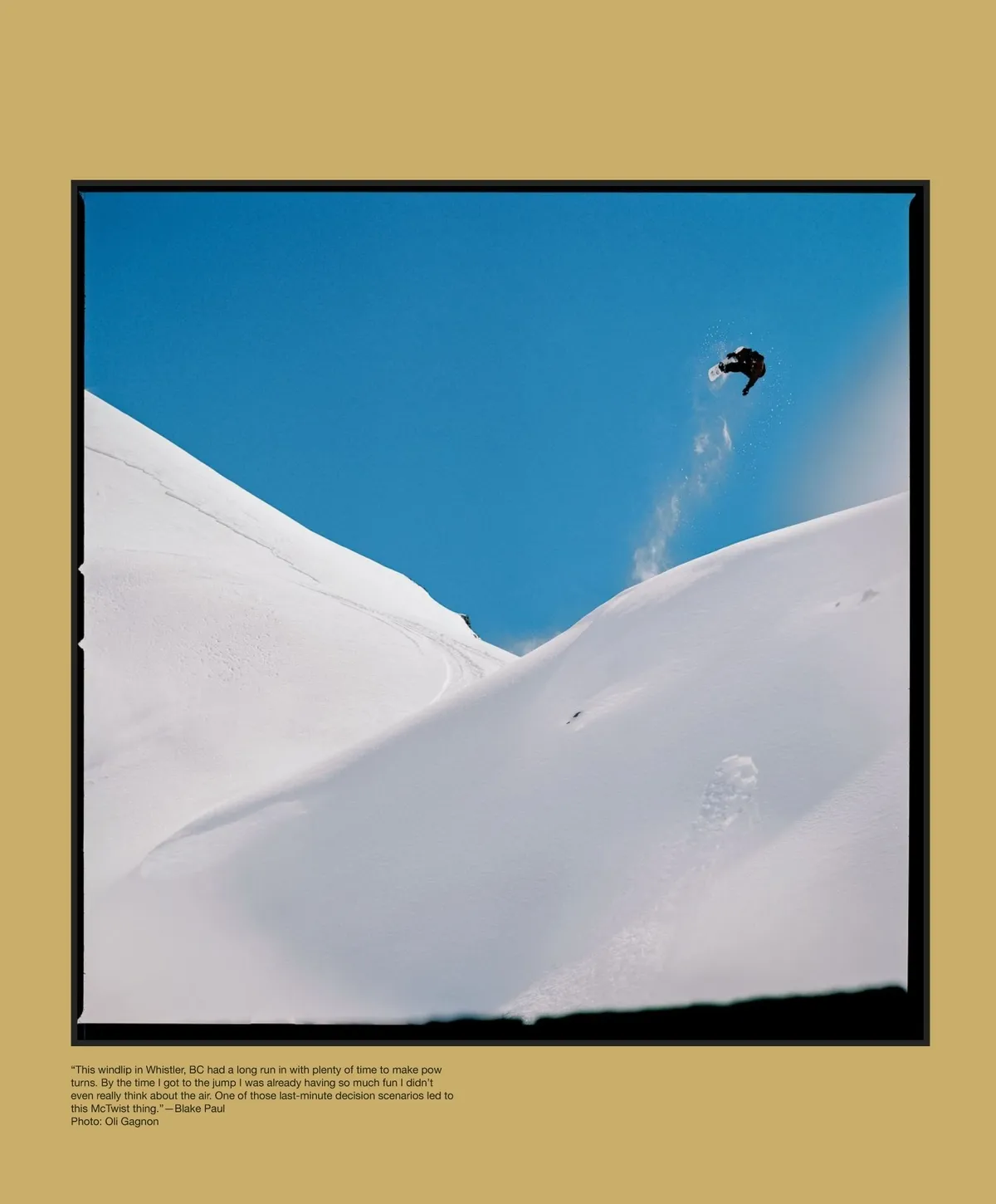
AARON’S IMPACT on Blake marks a distinct turning point in his life. “Seventeen is an age where you absorb much more from your peers than your parents,” says Mikey Leblanc. He finds a unique quality in Blake that may be traced subtly to Aaron’s influence. “His actions speak,” Mikey continues. “These crews he rolls with rarely have a strong and obvious leader, and Blake assumes that role naturally. Not because he wants to be in charge, but because he is so clearly aware of his goals, the goals of the rest of the crew, and he sees the bigger picture.” I joke with Mikey that Blake will go on to be a Hollywood director, citing his natural ability to articulate and manifest his vision. “Yeah, what’s impressive is that his vision considers every-one involved,” Mikey says. “He knows what’s best for the crew and works to ensure everyone succeeds. His style is a metaphor for his character. Whether that’s landing every trick he tries or showing up for his friends, he’s consistent.” Just outside of Barstow, CA, in 109-degree heat, I ask Blake to tell me about a few trips throughout his career that stand out to him. “Chamonix with Arthur [Longo] was for sure a crazy one,” he says, citing a discrepancy in tolerance for exposure be-tween himself and the Frenchman. “He had some step-down he wanted to show me that ended up not really working, but he still got a cover on it somehow. The hike up to it was so gnarly, icy rocks with sugary snow, and we were basically free-soloing up the side of this cliff. He’s just cruising up, no fear of heights, and I’m kinda trippin’.” I’m amused, but it’s not the kind of story I’m after. “What about one that felt like a turning point for you?” I ask. “I ended up on a trip with Bryan Fox, Jake Welch and Austin Smith–that was a crazy one for me,” Blake replies. “I grew up idol-izing those guys and watching their parts, and now I’m on a trip with them. Bryan did a double cork for the first time. Jake got his ender, Austin was being rogue as hell but always pulling it, and I was just there.” He laughs, but the story has a more profound point: if you commit yourself long enough, you will eventually become friends with your heroes. Another standout was an impromptu trip to New Zealand in 2016 planned with filmmaker Jon Stark barely a week before arriving in Queenstown. Blake was an unlikely addition to a crew best known for filming in the streets. Blake remembers the young Quebecois Dillon Ojo most notably from that trip: “By the end, we’d declared [Ojo] the MVP, not because he got the most shots, but because he brought this vibe, this passion for life. He sublimi-nally informed us that what we were doing was more significant than snowboarding. He reminded me of A-Rob in that sense.” Ojo got an iconic shot for the 2016 video, “Lords of the Chicken 8,” board-sliding a down-bar relic previously featured in high-profile films like Shawn White’s “The White Album” at the then-defunct Snow Park. “It was so sketchy; we had to bust open the gate to get into the place, and there was barely any snow up there,” Blake says. He looks at street snowboarding as a different sport from backcountry riding: “It’s more like skateboarding, and in my riding, I’ve always tried to emulate the process of the guys that do it proper, like Cole [Navin] and Ojo… It was obvious that Ojo saw things differently. He had more going on, he brought his DJ setup everywhere, and his whole aura was infectious. Everyone wanted to be like him.” Tragically, Ojo passed away in a freak accident in June 2018, almost seven years after we lost A-Rob. Having known Ojo brief-ly and felt his positive affect, that “life is crazy” feeling started to creep in again as Blake regaled. If we’re lucky, we idolize our friends. We celebrate what makes them unique and how they find their footing in this world. When a close friend and hero punches their ticket far sooner than seems fair—in Blake’s case, losing two close friends by the time he was 25—the impact of such untime-ly loss makes you stretch your emotional capacity and question parallels of consciousness far beyond your years. The person you were the day before you lost a friend remains a memory. Their character imprints itself onto yours, carrying forward the pieces of them you miss the most. It’s the greatest gift, which you’d do anything to return, if you could. “We can be our own worst enemy,” Blake says, encapsulating his ongoing emotional process of experiencing tragic losses. Aar-on’s head trauma reminded Blake of his near-death blow to the head at just seven years old, a baseball accident that resulted in life flights to two hospitals and more than 10 emergency surger-ies: “I don’t remember much other than being covered in blood and saying bye to my parents as the helicopter took off. I was ter-rified that I wouldn’t see them again. Losing Aaron and then Dil-lon a few years later brought all that trauma to the surface, and it took time to learn how to process it. One minute life is perfect, the next it’s a nightmare.” It has taken Blake many years and various verbal and nonverbal therapies to sort out his own healing. “It’s hard to accept respon-sibility for your trauma when you feel stuck in it,” he says. “I was so young that it was much easier to keep doing all the things that gave me these highs, like snowboarding, traveling nonstop, and living my childhood dream. But with those high highs, there’s al-ways equally low lows, and at some point, it became clear that I had to take responsibility for my healing process.” He realized he needed to zoom out and find an objective un-derstanding of the factors contributing to his state of mind: “I had to acknowledge that all of this mental stuff I was struggling with was a result of chemical reactions in my brain and that I can see it for what it is, and whether I manifest negativity or posi-tivity is my choice. Situations and facts are concrete. Emotions, thoughts, and feelings are a reaction to them. You have to choose what you give your energy to. It’s like nothing really matters, ex-cept everything matters.” 078 THE SNOWBOARDER’S JOURNAL
The Snowboarder's Journal The Snowboarder's Journal 21.2: Page 78